
Did you know that unplanned downtime costs industrial manufacturers nearly $50 billion annually? Or that inefficient processes and outdated systems can lead to 20-30% productivity losses? In today’s fast-paced world, businesses that fail to embrace smart manufacturing are leaving millions on the table—while their competitors surge ahead with digital transformation.
Now, imagine a factory that never stops learning, constantly optimizing, and making real-time decisions without human intervention. Welcome to the world of Smart Factories and Smart Manufacturing, where cutting-edge technology turns inefficiencies into profits.
Smart manufacturing is the strategic integration of advanced technologies such as AI, machine learning, and IoT to create an interconnected and data-driven production ecosystem. Unlike traditional factories, which rely on manual monitoring and reactive decision-making, smart manufacturing enables real-time insights, predictive analytics, and seamless automation—ensuring optimal efficiency at every stage.
In simpler terms, it’s like having a factory that thinks, adapts, and innovates on its own.
A Smart Factory is the physical realisation of smart manufacturing. It’s an intelligent, connected, and automated facility where machines, people, and systems work together in perfect harmony. Sensors, AI-powered algorithms, and cloud-based platforms continuously analyse data, predict potential failures, and adjust production lines on the fly to prevent costly disruptions.
For example, if a machine shows early signs of wear, predictive maintenance kicks in, preventing breakdowns before they happen. The result? Higher uptime, lower costs, and increased productivity.
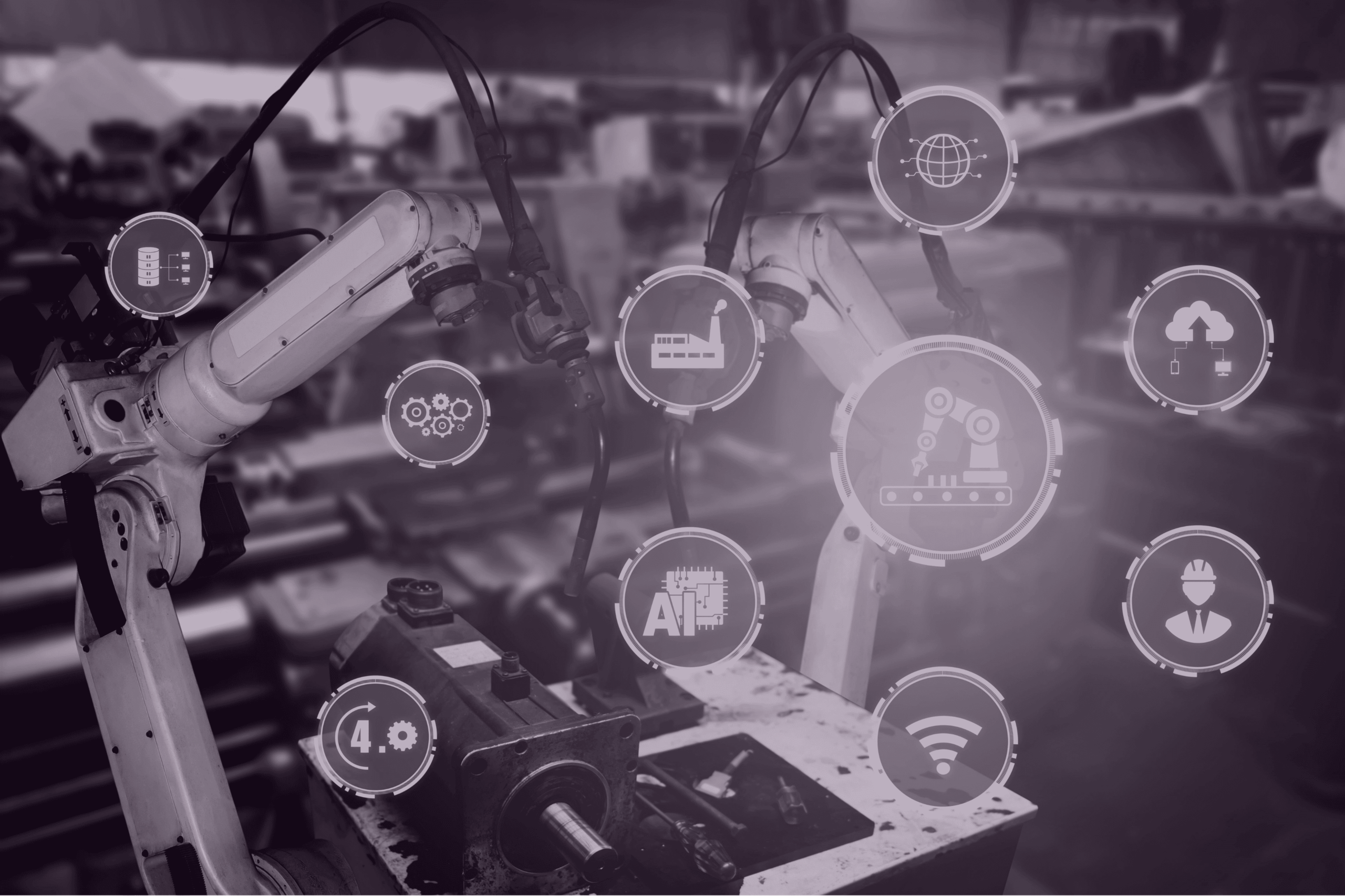
Smart factories rely on a combination of advanced technologies to enable seamless operations. These include:
Switching to a smart factory isn’t just about embracing the future—it’s about making informed, strategic decisions. Here are the factors business leaders must consider before making the shift:
A leading European automotive manufacturer implemented AI-driven quality control in their smart factory. The result? A 90% reduction in production defects and a 30% increase in efficiency. Similarly, semiconductor manufacturers have cut downtime by 50% using predictive maintenance and IoT-driven insights.
The message is clear: Smart factories aren’t a futuristic concept—they’re today’s competitive advantage.
Digital transformation is no longer optional—it’s a necessity. But navigating the shift to smart manufacturing requires expertise, strategy, and the right technology.
At InspireXT, we specialise in end-to-end digital transformation for manufacturers. Our expertise in AI-driven automation, IoT-enabled predictive maintenance, and supply chain optimisation ensures that your business gains measurable improvements in efficiency, cost reduction, and market competitiveness.
We don’t just implement technology – we create tailored solutions that align with your unique manufacturing challenges and business goals.
Why settle for outdated processes when you can future-proof your business? Let’s turn your factory into a smart, adaptive, and high-performing powerhouse.
Are you ready to take the leap? Let’s talk


Request for
services
Find out more about how we can help your organisation navigate its next. Let us know your areas of interest so that we can serve you better.