
Connecting commerce to operations with embedded AI to power the supply chain of the future
Enterprises today are not limited by technology. Most organizations have invested significantly in modern platforms across planning, supply chain, finance, manufacturing, and customer engagement. Yet despite this progress, many operations remain quietly disconnected. Systems exist, teams work hard, and data is being generated constantly, but the enterprise rarely sees a single, shared view of what is actually happening across the value chain.
Planning cycles, operational systems, and customer signals often move on different timelines. Demand signals may originate in commerce platforms, supply commitments in planning systems, production realities on the shop floor, and financial implications in entirely separate environments. Each function works diligently within its own domain, but the connections between them remain fragile or delayed.
The result is not a lack of effort or capability. It is a lack of connected visibility across the enterprise. Data exists but remains scattered and valuable insights stay locked in separate systems instead of guiding coordinated decisions across the organization.
As supply chains become more complex and market conditions move faster, this fragmentation becomes harder to sustain. What leaders increasingly recognize is that the challenge is no longer about adding more systems. It is about creating a connected operational view where data, processes, and decisions flow together across the enterprise.
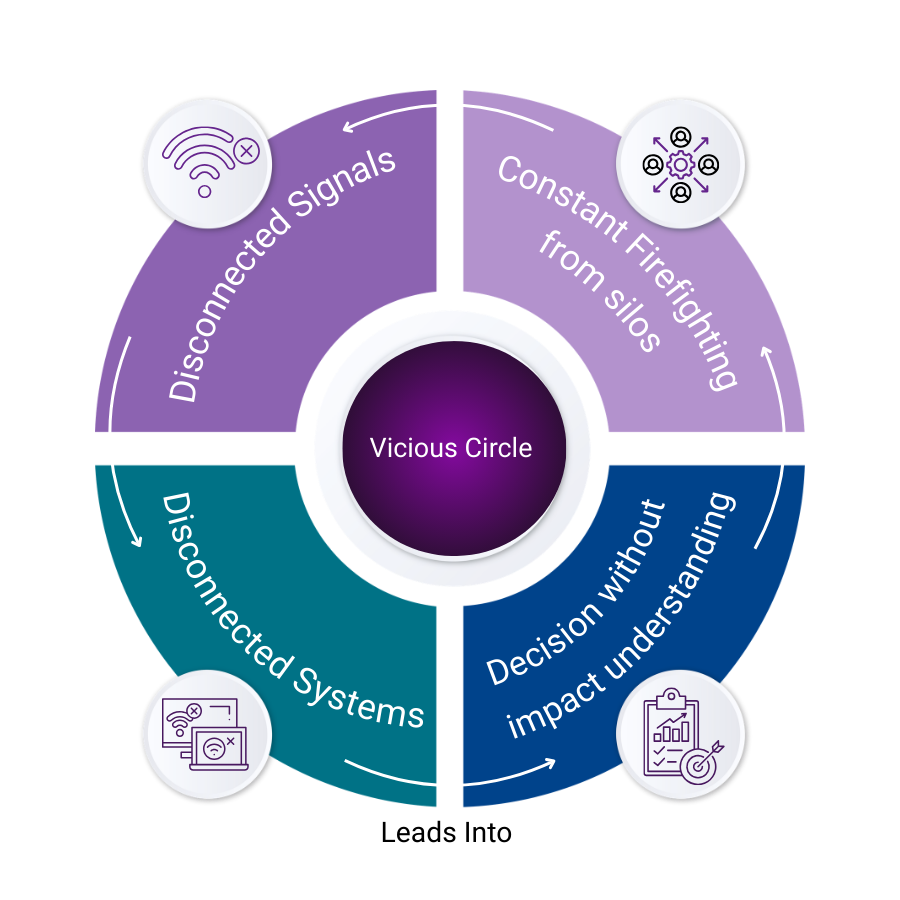
Supply chains today are being reshaped by forces that extend far beyond operational efficiency. Leaders are being asked to build organizations that can anticipate disruption, respond faster to market shifts, and balance growth with resilience.
As a result, supply chain transformation is increasingly being driven from the CEO agenda rather than from individual functional initiatives.
Anticipate disruption and respond earlier across the value chain.
Embed intelligence into planning and operational execution.
Balance growth with environmental and regulatory commitments.
Equip teams with digital and analytical capabilities.
Improve visibility from demand to financial outcomes.
Modern supply chains generate vast amounts of operational data, yet most organizations still struggle to turn those signals into coordinated decisions. Demand shifts appear in commerce systems, supply constraints emerge in operations, financial implications surface elsewhere, and the enterprise rarely sees these signals together in time to act decisively. Connected Intelligence brings these signals into a single operational view.
By aligning enterprise data, process context, and decision workflows, organizations gain the ability to understand how actions in one part of the value chain influence outcomes across the whole system. Instead of relying on fragmented dashboards and delayed reporting, intelligence becomes embedded within planning and execution roles. The result is a more connected enterprise — one where teams operate from shared signals, anticipate downstream impact earlier, and coordinate decisions across commerce, product, supply chain, finance, and operations.
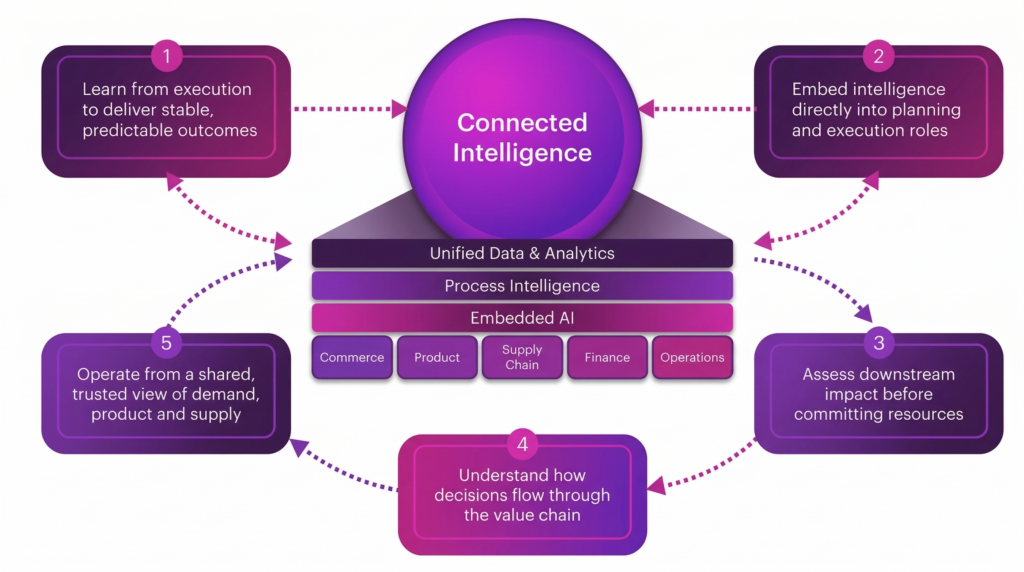
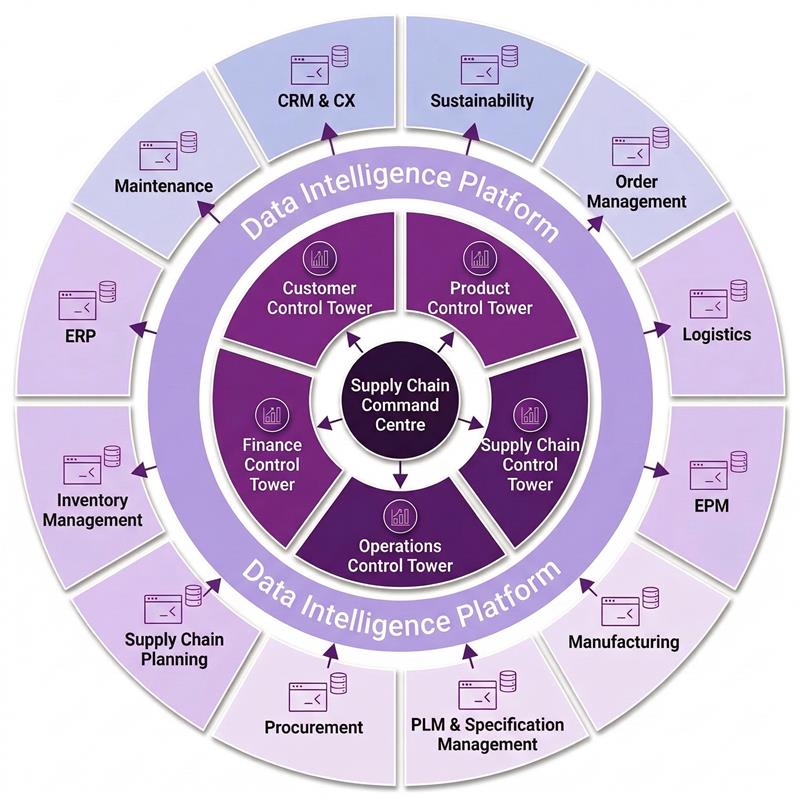
Connected Intelligence reaches its full potential when it guides real operational decisions. The Supply Chain Command Centre provides this coordination layer across the enterprise.
By bringing together signals from customer demand, product information, supply networks, financial impact, and operational execution, the command centre creates a shared operational view for the organization. Teams gain visibility into emerging disruptions earlier, understand downstream impact before committing resources, and coordinate decisions across functions rather than reacting within isolated systems.
Instead of relying on fragmented dashboards and delayed reporting, organizations operate from connected signals across the value chain. Control towers across commerce, product, supply chain, finance, and operations feed into a unified command environment, enabling leaders and teams to anticipate change, respond faster, and maintain stability across complex supply networks.