The problem is we write a policy once a year and then buyers ignore it — they email whoever they know, chase price, and patch approvals after the fact.”
That’s the single biggest irritation procurement heads to hear — policy exists on paper but not in daily buying behaviour. In the last 6–12 months this gap has become urgent: cost pressures have risen, audit scrutiny increased, and suppliers are demanding faster turnarounds. Buyers working remotely or in plants need quick answers — not the policy of PDF buried in SharePoint.
If nothing changes you get creeping non-compliance, fragmented supplier coverage, missed negotiated price breaks, and audit trails that are chased down in panic before reviews — all adding cost, risk and slower cycle times.
This isn’t one company’s mess — it’s structural. Most organizations break at the point where policy meets daily buying. Policies are created centrally but the operational controls are distributed: local buyers, ad-hoc email threads, spreadsheets and multiple ERPs. The policy-to-action gap is where value leaks.
Top two blockers we see:
Which value chain is under stress? Sourcing and procurement execution. They must be faster and more compliant simultaneously — negotiate best price and still deliver at pace. With supplier markets volatile and tighter margins, delays or wrong supplier choices directly hit COGS and audit exposure.
Core principle: Policy as programmable guidance — human decisions, policy-safe execution. Treat procurement policy as the single source of truth, not an annual PDF. Buyers should be able to ask a simple assistant “I need X” and get options that are already policy-checked, ranked by supplier, price break, agreement terms, and risk indicators.
Platforms that make this possible:
Our view: automate routine, policy-compliant buys entirely; surface exceptions early with clear choices; and ensure every PO has an auditable trail linking policy → decisions → approvals.
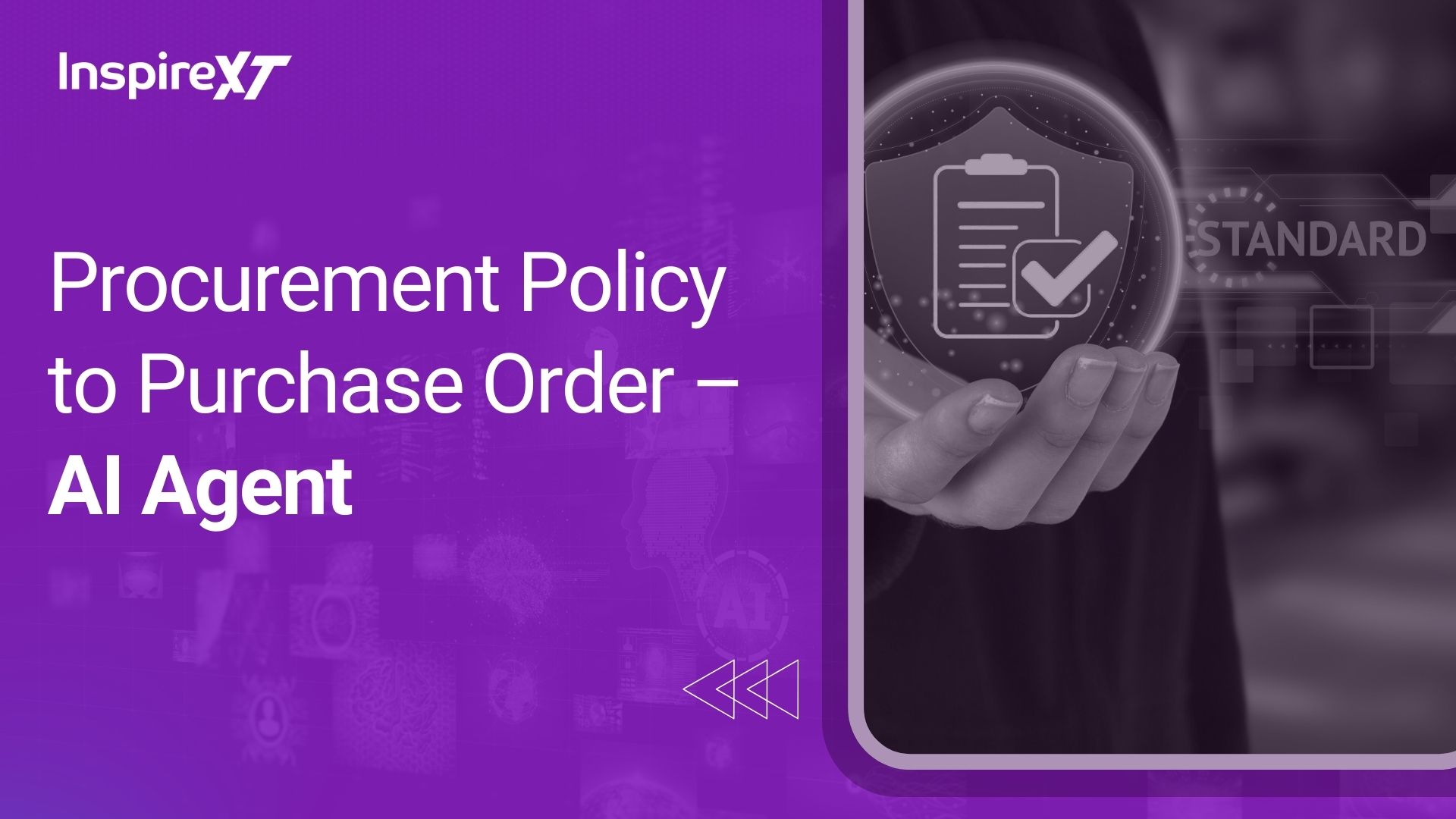
What we deliver is a complete Policy → PO digital execution layer, built using Oracle AI Agent Studio and seamlessly integrated with Oracle Procurement Cloud.
It ensures that procurement policy — an annual document that typically sits in a shared folder — becomes an active, operational engine guiding every buying decision.
Some elements of this solution are repeatable accelerators:
Other elements are tailored based on your organisation’s needs:
We integrate directly with core systems: Oracle Procurement Cloud, Supplier Master, Item Master, Contract repository and enterprise email services — ensuring every step is governed, traceable, and audit-ready.
In essence, this stage is where policy turns into guided buying + automated execution, creating a consistent, compliant, and frictionless procurement experience.
Imagine Policy→PO AI Agent capability is deployed for a global industrial manufacturer operating across three regions. Before this initiative, buyers frequently selected non-preferred suppliers, missed volume price breaks, and manually typed POs into the system. Compliance audits often required chasing email threads, and procurement leadership had limited visibility into whether the annual policy was being followed.
After the AI Agent went live, buyers simply told the system what they needed, and the agent automatically matched the requirement to the correct supplier, price break, and contract clause from the procurement policy. POs were drafted automatically in Oracle Procurement Cloud, routed for approval, and suppliers were notified instantly with email-ready templates.
What changed: within weeks, routine operational purchases moved from manual to conversational. Human effort dropped significantly, and the cycle time for standard POs reduced by 65%.
Performance indicators that moved:
Outcome: The client reported faster purchasing, reduced compliance noise, and a clear audit trail linking policy → recommendation → PO → approval.
If nothing changes, organisations will first feel the pain in cost leakage and audit exposure. Without a governed way of translating policy into day-to-day buying, non-preferred suppliers creep back in, negotiated pricing gets ignored, and procurement teams spend unproductive hours fixing incomplete or incorrect POs. This eventually shows up as higher operating cost, longer lead times, and audit findings that erode trust.
Smart organisations over the next 6–12 months will move toward policy-driven, conversational procurement as the expected norm. Policy should no longer sit in a PDF — it needs to power every buying decision through an AI agent that guides buyers, prevents errors, and automates compliant PO creation.
The natural next phase after Policy→PO is expanding into:
Together, these create a continuously improving procurement ecosystem where policy, data, and execution stay aligned throughout the year.
Request for
services
Find out more about how we can help your organisation navigate its next. Let us know your areas of interest so that we can serve you better.