
From Disruption Response to Signal-Led Supply Chains
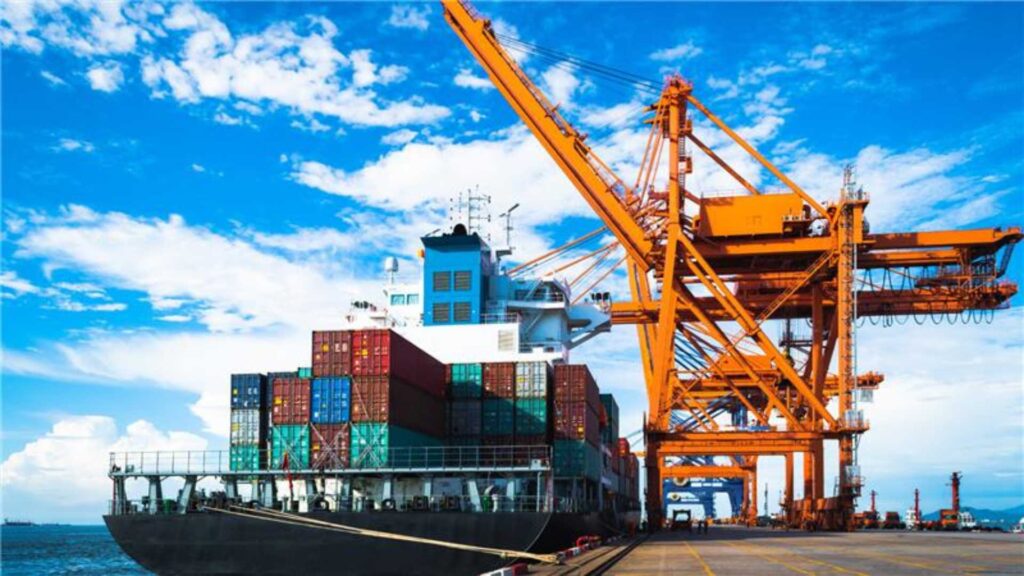
Key Takeaways Batch release delays often begin days earlier, in supplier deviations, missed deliveries, or quality flags that never came together in one view. Each function optimises its own metric, yet no one sees how today’s decision reshapes tomorrow’s execution. By the time a planner adjusts supply or a plant reschedules, the impact has already moved downstream into service levels and working capital. Most firefighting on the floor is the system compensating for decisions taken without full network context. Control returns only when demand, supply, and execution signals meet at the same decision point, not after the outcome is visible. The System Fails Before the Disruption Does What looks like a sudden disruption rarely begins where it is first seen. A missed delivery, a production delay, or a quality issue at release often carries signals that were already present days, sometimes weeks, earlier—inside supplier performance shifts, logistics variability, or capacity strain. These signals exist, but they remain scattered, held within functions, and never brought together in time to influence a decision. By the time the issue is recognised, it has already moved across tiers and into execution. The response then becomes reactive, not because the organisation is slow, but because the system was never designed to act earlier. What appears as disruption is simply the moment the system can no longer absorb what it failed to see. Fragmented visibility creates misaligned decisions The underlying issue is structural. Demand, supply, logistics, and risk signals are captured across different systems and functions, each operating with its own view of the network. While individual functions may have visibility, the enterprise does not. As a result, decisions are taken based on partial information, and their downstream impact is only understood after execution begins. This is where supply chains lose control—not at the point of disruption, but at the point of decision. Small shifts are amplified because the system does not respond in a coordinated way. Supply chains need to operate on signals, not events Responding to disruption after it occurs is no longer sufficient. The operating model needs to shift from event-driven response to signal-led coordination, where inputs from across the network directly inform decisions before disruption materialises. This requires that demand changes, supplier risks, logistics constraints, and inventory positions are understood together at the point of action. When decisions are made in isolation, variability propagates. When they are made in context, variability is contained. The difference is not in the speed of response, but in when and how decisions are taken. When signals and decisions operate together A supply chain that cannot align signals at the point of decision will continue to react to its own outcomes. What changes in a signal-led model is not the presence of disruption, but the timing and coherence of response. When demand, supply, and execution signals are brought into the same operating context, decisions begin to reflect how the network is actually behaving, not how it was last reported. Actions taken in one part of the system no longer create unintended consequences elsewhere because their impact is already understood at the point they are made. This is where a connected view becomes operational rather than analytical. It ensures that decisions are not revisited after execution, but held through it. The difference is not in how quickly disruption is managed. It is in how rarely it is allowed to propagate.
From Data Availability to Decision Alignment: Rethinking Information Flow in Manufacturing
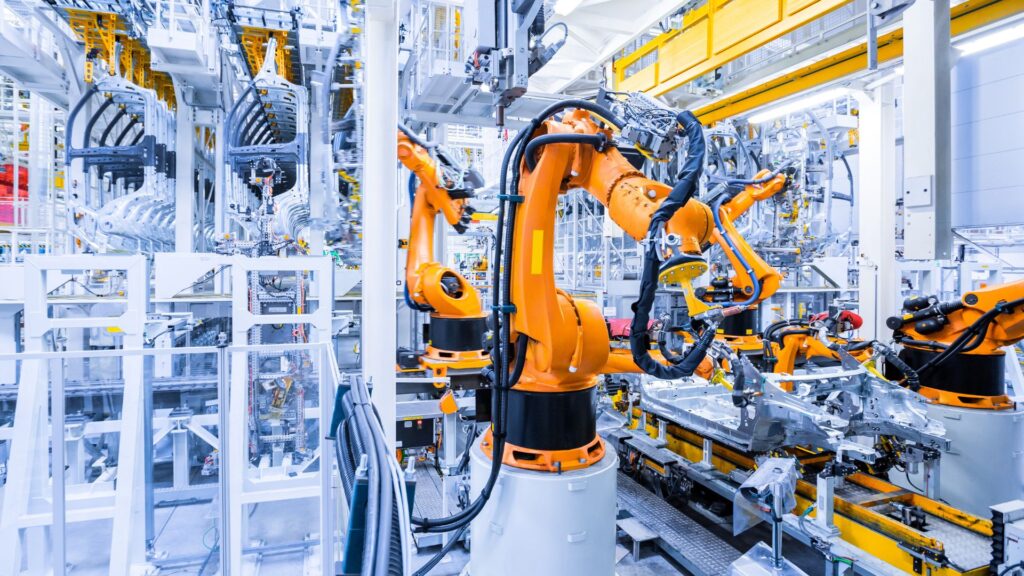
Key Takeaways Information lag in manufacturing is structural, created by how data moves across functions rather than by a lack of data itself. Decisions slow down because demand, capacity, material, and financial signals are not understood together at the point of action. Centralised reporting improves visibility, but does not eliminate the gap between what the system knows and what the enterprise acts on. A connected view of operations allows decisions to be taken with downstream impact in mind, rather than corrected after the fact. Embedding intelligence into planning and execution roles is what enables decision cycles to move at the speed of operations. When data exists but decisions still lag Manufacturing today is not short of data. Across production systems, supply networks, sales channels, and financial platforms, information is generated continuously. Yet in most enterprises, decisions continue to lag behind what the data is already indicating. By the time performance is reviewed, the state of operations has already moved on. This delay is not caused by the absence of data, but by how it is structured and consumed. Information sits within functions—production, supply chain, finance, commercial—each operating with its own cadence of updates, reporting cycles, and visibility. As a result, what appears as a complete view is often a consolidation of partial perspectives, assembled after the fact rather than understood in the moment. The consequence is not just slower decisions. It is decisions taken without full context, where actions in one part of the system create unintended effects elsewhere, only becoming visible when they need to be corrected. Why information lag is a structural problem Most manufacturing organizations have attempted to solve this through centralisation, bringing data into warehouses and dashboards to create a single version of the truth. While this improves reporting consistency, it does not resolve the underlying issue. Manufacturing decisions are inherently interconnected. Demand influences production, production shapes inventory, inventory affects working capital, and all of these evolve continuously. When each function captures and updates its data at different intervals, the enterprise loses synchronisation. Visibility moves at different speeds, and decisions are made on snapshots that no longer reflect the current state. What this creates is a structural lag between what the system knows and what the enterprise acts upon. The more complex the operation becomes, the wider this gap grows, and the more effort is required to bridge it manually. From reporting systems to a connected operational view Addressing this requires a shift in how information flows through the enterprise. Data can no longer be treated as something that is consolidated periodically and reviewed retrospectively. It needs to move continuously, owned by the domains that generate it, and available in a form that can be acted upon across functions. This is where a connected view becomes critical. Demand signals, production constraints, material availability, and financial impact need to be understood together, not in sequence. When these signals are aligned, decisions can be made with awareness of their downstream implications, rather than being corrected later. In practice, this takes shape through an operating layer that brings together sensing, processing, and response into a single loop. Often described as a digital nervous system, it connects data ingestion, signal interpretation, and decision-making across the enterprise. The objective is not visibility alone, but coordination—ensuring that decisions reflect the state of the system as it exists, not as it was last reported. What changes when decisions move at the speed of operations When information begins to flow in this way, the effect is not limited to faster reporting, but to how the enterprise operates. Decision cycles compress because signals are available when they are needed. Planning and execution become more closely aligned because they operate on the same view of demand and constraints. The need for manual reconciliation reduces, as the system itself carries context across functions. This is the basis of Connected Intelligence—where data, process context, and decision workflows operate together, allowing the enterprise to anticipate impact, coordinate actions, and maintain stability even as conditions change. Technology plays a role in enabling this shift. Platforms that support domain-driven data ownership, real-time data movement, and integrated decision environments allow organizations to move beyond fragmented dashboards toward a unified command layer. Within such an environment, signals from production, supply chain, commercial, and finance are not reviewed separately, but understood together, allowing leadership and teams to act earlier and with greater confidence. At that point, performance is no longer defined by how quickly reports are produced or how often decisions are revisited. It is defined by how consistently the enterprise can act on a shared, real-time understanding of its operations.
From Planned Schedules to Responsive Execution: Rethinking Manufacturing Operations
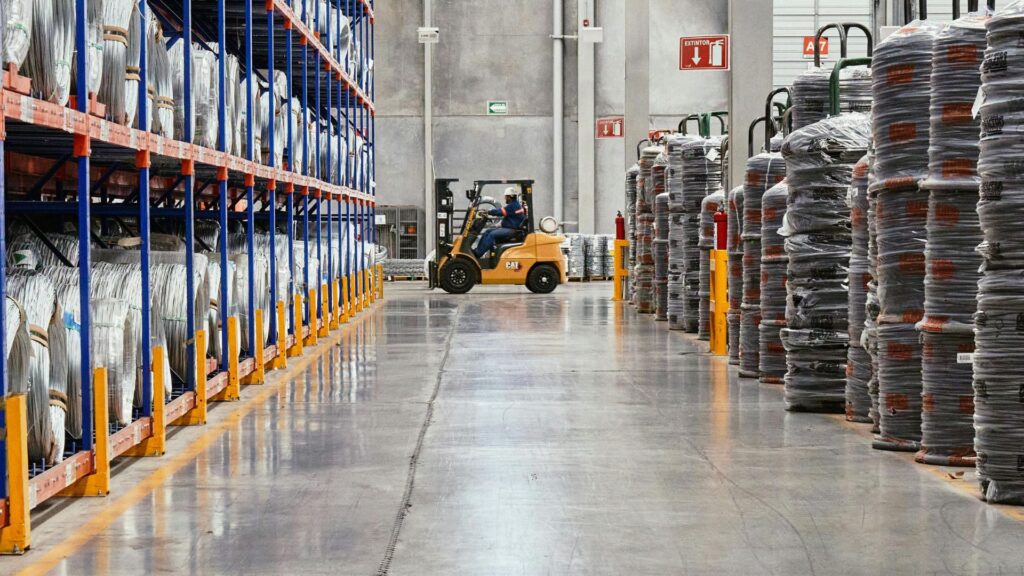
Key Takeaways Manufacturing breaks where planning and execution operate on different assumptions about capacity, materials, and sequencing. Replanning cycles are a symptom of constraints being surfaced too late, not a lack of planning capability. Manual coordination is the invisible layer holding fragmented systems together—and the first point of failure at scale. Capacity loss is driven more by misalignment in execution than by structural limitations in assets or resources. A connected view of demand, capacity, and supply is what allows decisions to hold beyond the planning stage. When planning stops carrying execution Manufacturing has long operated on the assumption that if a plan is sufficiently detailed, execution will follow with limited deviation. Demand is forecast, production is scheduled, and resources are allocated with the expectation that variability can be absorbed through incremental adjustments. That assumption weakens as production environments become more dynamic, where orders shift, materials arrive out of sequence, and equipment availability changes in ways that cannot be fully anticipated at the planning stage. What begins as a structured plan gradually encounters conditions it was not designed to handle, and while planning continues to define intent, it becomes less capable of sustaining execution without intervention. Where execution begins to rely on intervention On the shop floor, this shift is visible in how schedules behave over time. A production plan may initially reflect demand, capacity, and sequencing assumptions, but as constraints surface—maintenance windows extending, shift availability changing, materials arriving out of alignment—the schedule is revised repeatedly to accommodate what is actually possible. Sequencing decisions are reworked, capacity is reallocated, and downtime reshapes how work is organised. Over time, the schedule reflects not the original plan, but the accumulated adjustments required to keep production moving. Execution becomes dependent on planners and supervisors continuously reconciling gaps between what was planned and what can be executed, creating a model where performance relies on effort rather than system stability. From planning accuracy to execution alignment The shift required here is not toward more detailed planning, but toward reducing the gap between planning and execution so that the system itself can absorb variability. Planning and scheduling can no longer operate as separate layers where one defines intent and the other absorbs disruption. They need to function as part of a continuous process where constraints such as capacity, sequencing, material availability, and downtime are accounted for within the system rather than corrected outside it. Technology becomes relevant at this point, not as a tool for generating better plans, but as a means of ensuring that planning remains aligned with execution as conditions evolve. Platforms such as Oracle Fusion Cloud Planning enable constraint-based scheduling by embedding capacity limits, shift patterns, maintenance windows, and sequencing dependencies directly into how schedules are formed and adjusted, allowing decisions to reflect actual operating conditions rather than assumptions. A connected view of manufacturing decisions As manufacturing moves in this direction, the requirement extends beyond responsiveness into coordination. Demand signals, capacity constraints, material availability, and financial impact are often captured across different systems, but they are rarely understood together when decisions are made. The result is that actions taken in one part of the system create consequences elsewhere, which are only addressed after the fact. A connected view brings these signals into a shared operational context, allowing decisions to be made with an understanding of their downstream impact at the point they are taken. This is the foundation of Connected Intelligence, where data, process context, and decision workflows are aligned so that planning and execution operate from the same set of conditions. In practice, this takes shape through a command environment that brings together signals from demand, supply, production, and financial impact into a single operating view. Supported by Oracle’s planning and integration capabilities, this allows organizations to anticipate disruptions earlier, coordinate decisions across functions, and maintain stability across complex production environments. At that point, performance is no longer defined by how effectively teams respond to breakdowns in the plan, but by how consistently the system can operate without requiring those breakdowns to be corrected.